Tank, tankless or heat pump: choosing a water heater for a Sacramento home
When a water heater fails, most people replace it with the same thing. That is often fine. But it is also the one moment when switching types is easiest.
By Nora Chambliss, Plumbing Articles EditorPublished July 29, 2026
Standard tank heaters
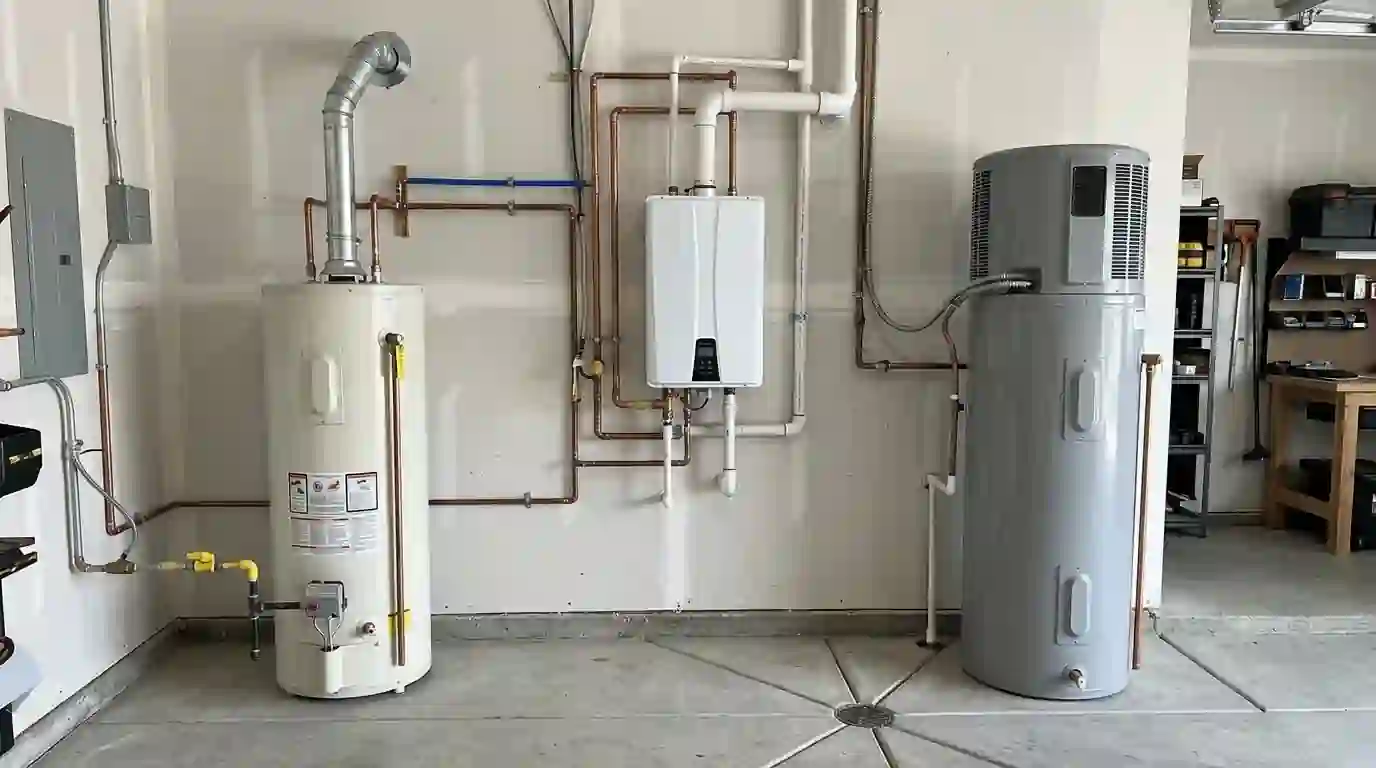
A gas or electric tank keeps 40 to 50 gallons hot all day. Tanks are the least expensive to install, simple to repair, and familiar. They lose some heat standing in a warm or cold garage, and they typically last 8 to 12 years.
If your current setup works and your household is not running out of hot water, a like-for-like tank is a reasonable choice. Our replacement page explains what a proper install includes.
Tankless heaters
Tankless units heat water only when you use it. They never run out during back-to-back showers, they mount on a wall to free floor space, and they commonly last 15 to 20 years.
The catch is installation. Whole-house gas tankless units often need a bigger gas line, new venting and a condensate drain, which raises the up-front cost. They also need a yearly flush, especially where water is hard.
Heat pump water heaters
A heat pump water heater is an electric tank with a small heat pump on top that pulls heat from the surrounding air. It uses a fraction of the electricity of a standard electric tank.
It needs space around it for airflow, a condensate drain and usually a 240 volt circuit. Sacramento's warm garages suit them well. SMUD has offered rebates for them, so check the current offer before deciding.
Sizing matters more than brand
An oversized tank costs more to keep hot. An undersized tankless unit runs out of capacity when two showers and the dishwasher run at once. A heat pump unit placed in a cramped closet without airflow will lean on its backup elements and lose much of its efficiency.
We size water heaters from your household: how many bathrooms, how many people, whether you have a soaking tub, and when hot water is used. That conversation usually takes ten minutes and saves years of either cold showers or wasted energy.
Installation details people miss
In California, tank heaters must be strapped against earthquakes, and most installs need an expansion tank when the home has a pressure regulator. Gas units need correct venting and combustion air. Tankless units need service valves for flushing. Heat pump units need a condensate drain.
These details are what separate an install that lasts from one that fails early or fails inspection. Ask any installer how they handle each one.
Which one fits your home?
Choose a tank if budget is tight and your current system meets your needs. Choose tankless if you have a large household, want endless hot water and already have adequate gas or are remodeling. Choose a heat pump if you are moving toward all-electric, have solar, or want the lowest operating cost.
We price all three side by side from the same site visit, so the decision is based on your house, not a sales pitch.
Questions readers ask
Which option lasts the longest?
Tankless units typically last longest with maintenance, followed by heat pump units and then standard tanks.
Can I switch from gas to a heat pump?
Usually, yes, with an electrical circuit added. We coordinate with an electrician when one is needed.
About the author
Nora Chambliss edits the plumbing articles for John's Plumbing, turning what our plumbers see on Sacramento-area jobs into plain guides for homeowners.
Water where it should not be? Call now.
A John's plumber answers (916) 602-0883 day and night, tells you how to stop the damage, and quotes the repair before any work starts.