Tree roots in sewer lines: the City of Trees problem nobody sees
Sacramento's tree canopy is one of its best features. Underground, it is also the leading cause of main sewer line backups in older neighborhoods.
By Nora Chambliss, Plumbing Articles EditorPublished August 20, 2026
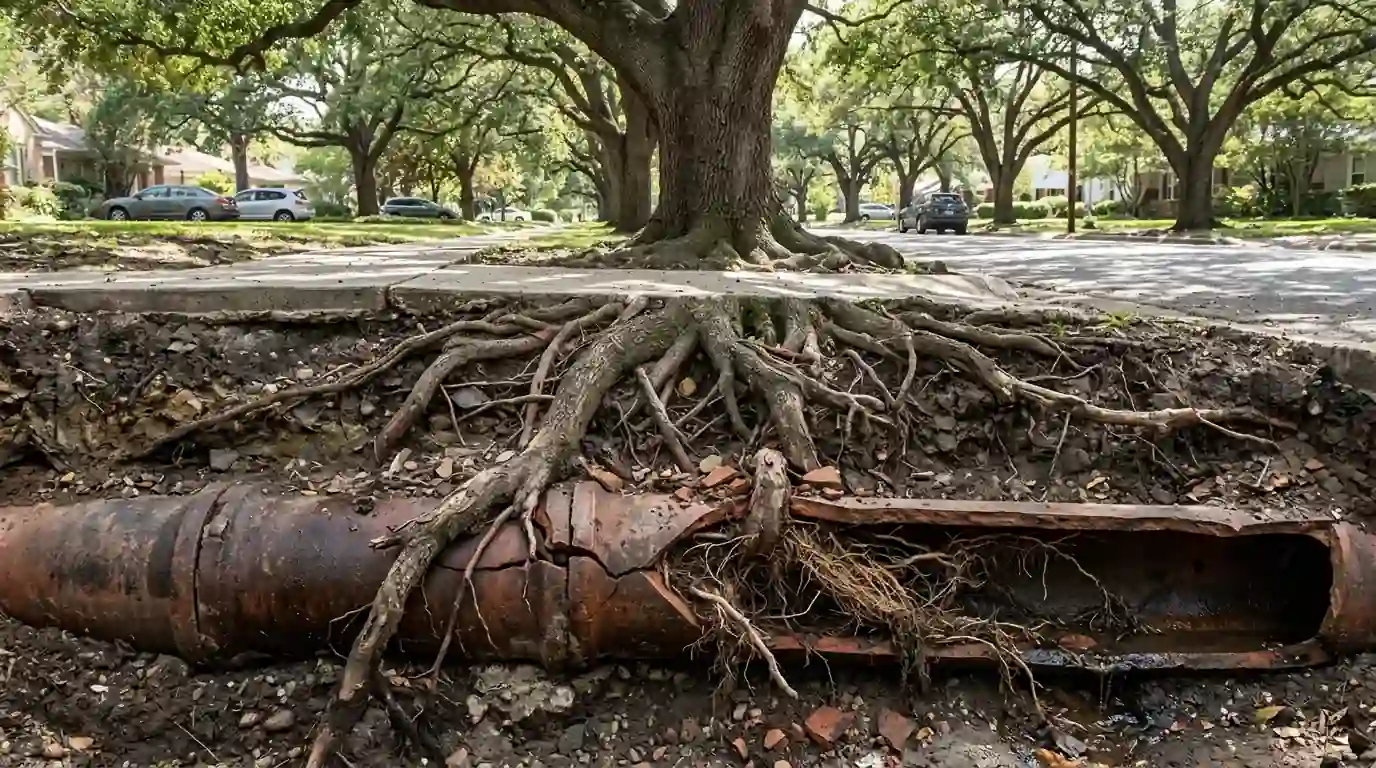
How roots get in
Tree roots grow toward water and nutrients. An old clay sewer pipe is made of short sections joined every few feet, and as the joints age they let out a little moisture and warm air. Hair-thin roots find those joints, grow inside, and feed on what flows past.
Over a year or two, those hair roots thicken and spread into a mat that catches toilet paper and debris. The line slows, then backs up, usually at the worst possible moment.
Which homes are most at risk
Homes built before the 1970s in neighborhoods like Land Park, East Sacramento, Curtis Park, River Park and Hollywood Park often have clay or Orangeburg sewer laterals running under mature trees. That combination is behind a large share of the main line calls we answer.
Newer homes with plastic laterals and glued joints see far fewer root problems, though roots can still exploit a cracked or poorly joined section.
Clearing roots
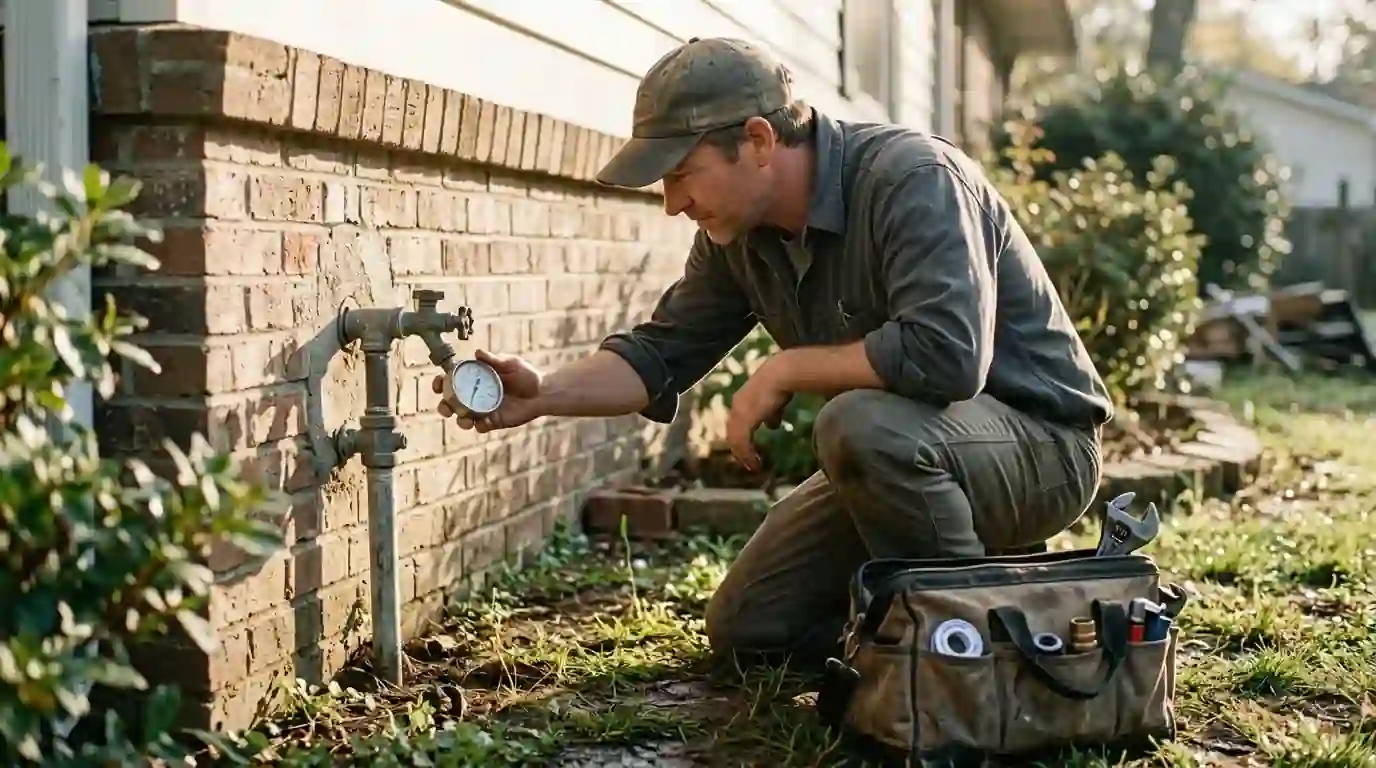
A root-cutting blade on a drain cable, or a root nozzle on a hydro jetter, removes the mat and restores flow. That is the right first step during a backup. It is not a permanent fix, because the joint that let roots in is still open, and roots usually return within one to two years.
After clearing, we run a camera through the line to see where roots enter and what condition the pipe is in.
Long-term fixes
You have three realistic choices. Scheduled maintenance clears roots every 12 to 18 months and costs the least in any single year. A spot repair replaces a few bad joints when the damage is concentrated. Lining or pipe bursting replaces or seals the whole lateral, which ends the root problem for decades.
Cutting down the tree is rarely necessary, and street trees are often protected. Sealing the pipe protects both. Our tree root removal and trenchless replacement pages explain each option.
What a root problem looks like from inside the house
The earliest sign is usually a toilet that gurgles when the washing machine drains, or a tub that drains slowly no matter how many times the hair is cleaned out. As the root mass grows, the lowest drain in the house, often a shower or a laundry floor drain, starts to fill with dirty water when other fixtures run.
By the time sewage comes up a drain, the line is almost fully blocked. Stop using water and call for a main line clearing through the outside cleanout.
Why camera footage matters
Two lines with the same root problem can need very different repairs. If roots enter at one or two joints near the house, a short spot repair may be all that is needed. If they enter at every joint for eighty feet, lining or bursting the whole lateral is the better value.
The only way to know is to look. A recorded camera inspection after the roots are cut shows each entry point, its distance from the cleanout and its depth, which turns the repair quote into something you can check.
A simple habit that helps
If you know roots are present, do not wait for a backup. Mark the date of your last cleaning and schedule the next one before the line has time to close up again.
Questions readers ask
Do foaming root killers work?
They can slow regrowth after a cleaning. They do not repair the joint, so roots will eventually return.
Is the city responsible for roots from a street tree?
Responsibility for the lateral and for street trees varies by agency. The section from the house toward the property line is usually the owner's. Call your sewer agency if roots come from a city tree.
About the author
Nora Chambliss edits the plumbing articles for John's Plumbing, turning what our plumbers see on Sacramento-area jobs into plain guides for homeowners.
Water where it should not be? Call now.
A John's plumber answers (916) 602-0883 day and night, tells you how to stop the damage, and quotes the repair before any work starts.