Hard water in Sacramento's suburbs: softener, conditioner or filter?
Two houses fifteen miles apart in the Sacramento region can have very different water. The difference is mostly where it comes from.
By Nora Chambliss, Plumbing Articles EditorPublished May 27, 2026
Why hardness varies
Water drawn from the American and Sacramento rivers tends to be relatively soft. Groundwater, pumped from wells, picks up calcium and magnesium as it moves through soil and rock, so it tends to be harder.
Many water providers in the region blend river and groundwater, and the mix can change with the season and with drought years. Your provider's yearly water quality report lists hardness, often in grains per gallon or milligrams per liter.
What hard water does
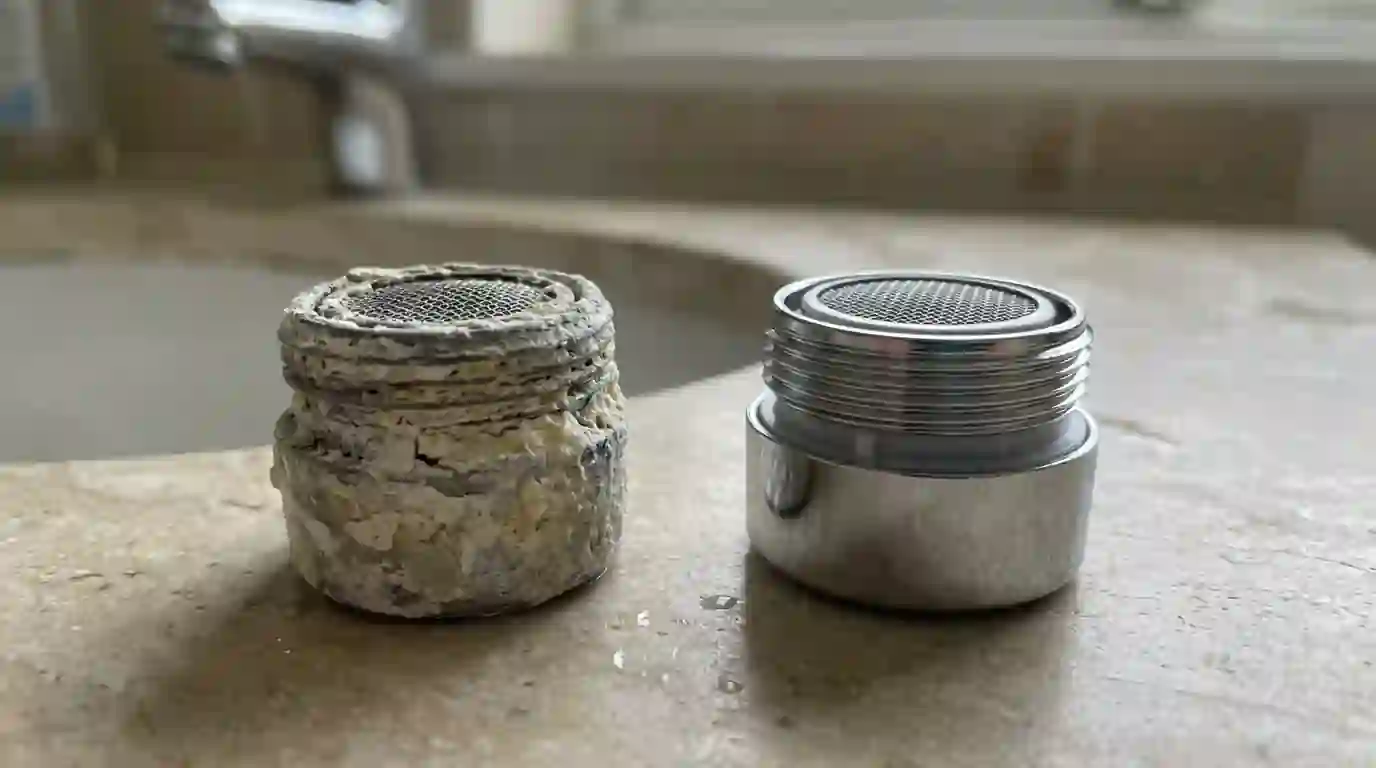
Scale builds up on faucet aerators and shower heads, leaves spots on dishes and glass, and coats the inside of water heaters. In tank heaters, scale settles on the bottom and makes them less efficient. In tankless heaters, it coats the heat exchanger and triggers error codes.
Softeners
A traditional softener removes hardness minerals by ion exchange. It works well, but it needs salt and a drain, and some wastewater agencies limit salt discharge. Softened water has a small amount of added sodium.
Salt-free conditioners
Conditioners change how minerals behave so they are less likely to form scale. They need no salt or drain. They do not remove minerals, so spots on glass may remain, but they protect heaters and plumbing well.
Filters
Filters address taste, odor and sediment. A carbon filter removes chlorine taste; reverse osmosis gives you high quality drinking water at one tap. Filters do not soften water, but many homes pair one with a softener or conditioner.
Signs your water is harder than you think
White crust on shower heads and faucet tips, cloudy glasses from the dishwasher, a kettle with a scaly bottom and soap that will not lather are all signs of hard water. A tank water heater that pops and rumbles is boiling water trapped under a layer of scale.
Test strips from a hardware store give a rough reading in a minute. For a firmer answer, check your water provider's report or ask us to test on your next visit.
Protecting a water heater on hard water
Flush tank heaters once a year to drain sediment from the bottom. Descale tankless heaters once a year with a pump and a mild acid solution through the service valves. Check the anode rod in a tank every few years; it wears away to protect the tank and is cheap to replace.
These steps cost little and can add years to a heater, whether or not you install a softener.
Our advice
Test first. If hardness is low, skip the softener and flush your heater yearly. If it is high, choose a softener or conditioner based on local rules and your preferences.
Questions readers ask
Does hard water damage pipes?
It rarely causes leaks by itself, but scale narrows small lines and shortens the life of valves, heaters and appliances.
How often should I flush my water heater on hard water?
Once a year for tanks and tankless units alike.
About the author
Nora Chambliss edits the plumbing articles for John's Plumbing, turning what our plumbers see on Sacramento-area jobs into plain guides for homeowners.
Water where it should not be? Call now.
A John's plumber answers (916) 602-0883 day and night, tells you how to stop the damage, and quotes the repair before any work starts.